Blog · September 15, 2026 · 16 min read
Google Health Guardian vs Apple Watch: What Each Sees
Google's Health Guardian promises insulin-resistance and blood-pressure trends from a watch. Here is what it does and what Apple Watch can match.
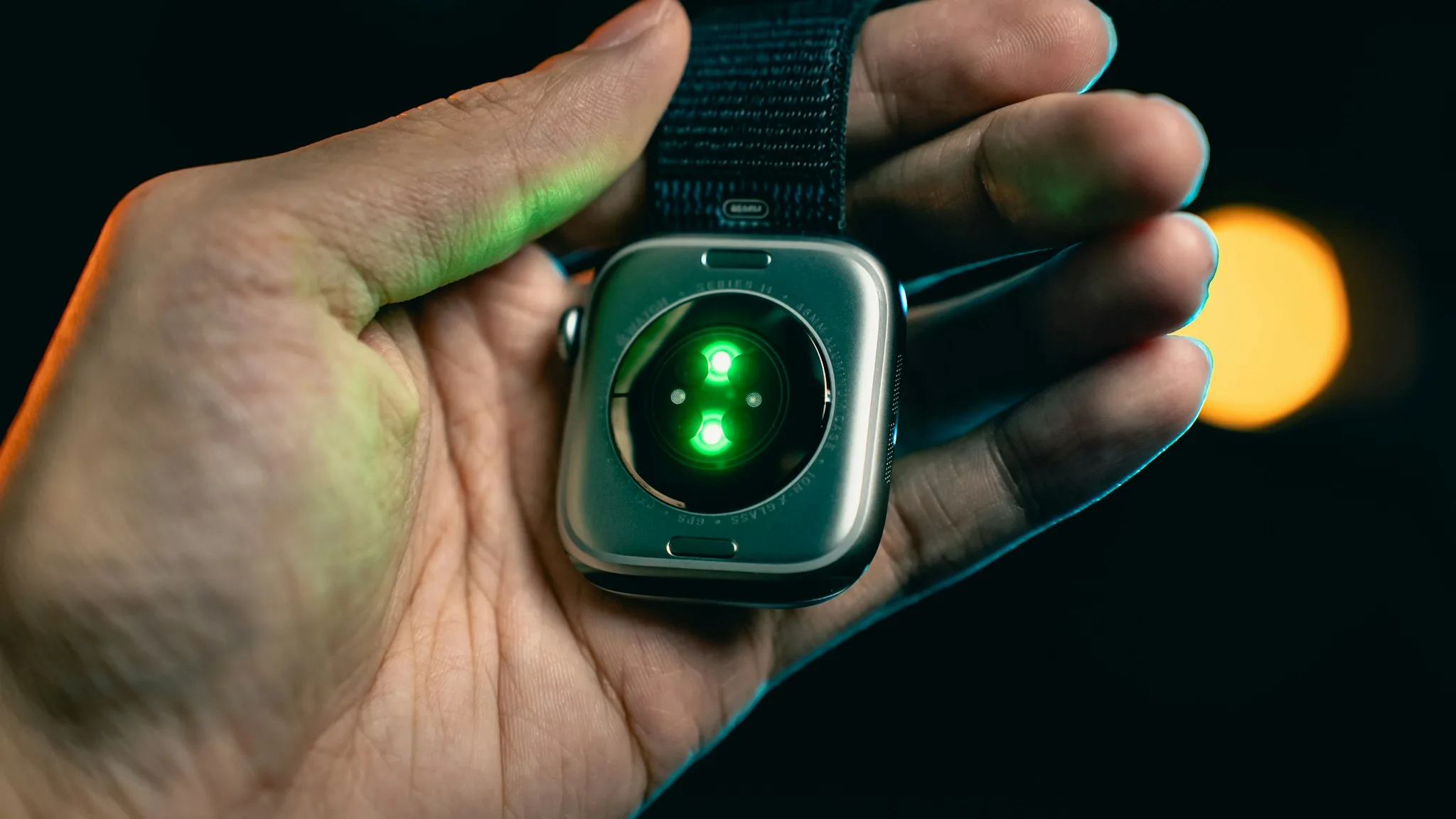
Google used its Made by Google event on August 12, 2026, to announce Health Guardian, a set of health tools for Pixel Watch and Fitbit Air. The two headline features are passive trends for insulin resistance and blood pressure. The watch also rates sleep breathing quality and watches for breathing emergencies. Google says the insulin model was trained on more than 1 trillion minutes of data from 5 million users who opted in.
Apple answered a few weeks later. On September 9, 2026, it announced a new Health Sensing System for Apple Watch Series 12 and Ultra 4. It also announced a readiness score and a redesigned Health app with Apple Intelligence inside.
If you want passive metabolic trends, Google Health Guardian is ahead. No Apple Watch can estimate insulin resistance or blood-pressure trends today. If you want heart features that are cleared, validated, and available now, Apple Watch wins. It has the ECG app, AFib History, nightly wrist temperature, and fall detection. Neither device diagnoses anything on its own. Both give you trends and prompts to talk to a doctor.
This post walks through what Guardian does, what Apple Watch can match, and where each falls short. Every claim comes from Google's and Apple's own announcements and support pages, linked at the bottom.
The short answer
- Health Guardian is a suite of health and safety tools for the Pixel Watch 3, 4, and 5 plus Fitbit Air, announced August 12, 2026.
- Its headline features are passive trends for insulin resistance and blood pressure. It also rates your sleep breathing quality and can detect breathing emergencies.
- The insulin model was trained on more than 1 trillion minutes of data from 5 million opted-in users, and it is not meant to diagnose or manage diabetes.
- Everything Guardian shows is a trend, not a diagnosis. The same is true on Apple Watch.
- Apple Watch matches some of this, with AFib tracking, ECG, nightly wrist temperature, and a new readiness score. It lacks insulin-resistance trends and blood-pressure trends today.
What is Google Health Guardian?
Health Guardian is a collection of health and safety tools that work across qualifying Pixel Watches and the new Fitbit Air. It sits inside the Google Health app, which is the renamed Fitbit app. The app collects physiological data in the background, then looks for shifts in your health over weeks and months.
Google says the insulin-resistance and blood-pressure trend features will arrive "later this fall" in the Google Health app. They will work on the Pixel Watch 3, Pixel Watch 4, Pixel Watch 5, and Fitbit Air. Breathing emergency detection launches first on the Pixel Watch 4 and Pixel Watch 5 in several European countries, and not yet in the U.S.
Health Guardian is separate from, but tied into, the Google Health Coach. That is a Gemini-powered AI coach that launched on May 19, 2026, alongside the Google Health app as part of the Google Health Premium subscription at $9.99 per month or $99 per year. It asks about your goals and routine during setup, then gives personalized guidance you can talk to in plain language. The coach reached select Fitbit and Pixel Watch users first, with more devices promised. Google has not said which Health Guardian features, if any, will require that Premium subscription.
You can view all regionally available trends in the Google Health app monthly, alongside notes on where notable shifts occurred.
What can it actually detect?
Four things were announced. Here is what each one claims to do, with the caveats Google itself attached.
Insulin-resistance trends. Insulin resistance changes how your body takes in energy from food. Guardian's AI models look at several weeks of data from your body. Then they flag where shifts in your metabolic health occurred. Google says the goal is to catch shifts associated with insulin resistance early, so you can adjust nutrition, sleep, or movement. The model was trained on more than 1 trillion minutes of data from 5 million users who opted in. Google states plainly that the feature is not intended to diagnose or manage diabetes.
Blood-pressure trends. The watch passively measures your pulse and motion patterns to estimate how your blood pressure is trending over time. Google says the goal is to help you decide whether lifestyle changes or a talk with a healthcare professional make sense. The model was trained on WavesFM, a foundation model trained on billions of minutes of raw heart and movement data. This is a trend line, not a blood-pressure reading in millimeters of mercury.
Sleep breathing quality. Guardian looks at your breathing patterns while you sleep. It also looks for longer-term changes. Those changes may affect your daytime energy and recovery. You can use the patterns to decide whether to adjust your sleep environment and habits, or to speak with a healthcare professional.
Breathing emergency detection. This is the safety feature. It watches for a persistent or critical drop in blood oxygen. That can happen during an accidental drug overdose, choking, or severe pneumonia. If you do not respond, it calls for help on its own. It dials emergency services and your emergency contacts. It reads heart rate, motion, and altitude sensors, and it checks that you are in a low-motion state without rapid altitude changes to avoid false alarms. To avoid confusing sleep apnea with an emergency, it will not trigger if you have been asleep for more than 30 minutes.
What can Apple Watch do today, feature by feature?
Apple's September 9, 2026, announcements add a lot to the Apple side. The new Health Sensing System on Apple Watch Series 12 and Ultra 4 has new heart sensors. It measures heart rate every five seconds, all day long. It also measures HRV, or heart rate variability, as often as every five minutes. Apple says that is 24 times more often than before. Apple says a study of more than 1,000 participants found its new heart rate sensing was the most accurate across the leading wearables it tested.
Apple Watch now has a readiness score. It blends recent activity, vitals, and your sleep score into a single 0 to 10 number each day. Each score comes with a clear label: Recover, Pace Yourself, Ready, or Go For It. It updates through the day as new data arrives, and it shows which factors are driving the score. Apple built the scoring algorithm with data from the Apple Heart and Movement Study. If you want to go deeper on how these scores are built, see our guide to Apple Watch readiness models.
The redesigned Health app comes with iOS 27. It adds an Insights tab with a daily summary. That summary spans heart, sleep, readiness, fitness, vitals, and cycle tracking. A new Longevity tab analyzes your long-term data across heart health, sleep, metabolic health, and more. It also includes Health Age. That feature compares your metrics to your chronological age. It can also factor in lab data like A1c and LDL. There is much more in our watchOS 27 health features roundup. watchOS 27 itself arrived September 14, 2026, for Apple Watch Series 9 or later, SE 3, and Ultra 2 or later.
Here is how the two watches stack up on each feature.
| Feature | Google Health Guardian | Apple Watch |
|---|---|---|
| Insulin-resistance trends | Yes. Passive, several weeks of data. Launching later this fall. | No. |
| Blood-pressure trends | Yes. Passive pulse and motion analysis. Launching later this fall. | No. |
| Sleep breathing quality | Yes. Longer-term breathing patterns during sleep. | No matching view. The Vitals app shows overnight metrics like heart rate and Recovery HRV against your baseline. |
| Readiness | Not announced. | Yes. A 0 to 10 score on Series 12 and Ultra 4, built on activity, vitals, and sleep. |
| AFib tracking | Not announced. | Yes. The ECG app checks for AFib, and AFib History gives a weekly percentage estimate if a doctor has diagnosed you. |
| Temperature | Not announced. | Yes. Nightly wrist temperature on Series 8 or later, all Ultra models, and SE 3. |
| ECG | No. | Yes. A 30-second, single-lead style recording on Series 4 or later and all Ultra models. |
| Fall detection | Not announced. | Yes. On SE or later, Series 4 or later, and all Ultra models. |
| Breathing emergency detection | Yes. Europe first, on Pixel Watch 4 and 5. Not yet in the U.S. | No. |
A few rows deserve detail.
Apple's ECG app records for 30 seconds. It uses the electrical heart sensor on Series 4 or later and all Ultra models. It then checks the recording for AFib, a form of irregular rhythm. Apple tested the app in a clinical trial of roughly 600 subjects. It reported 99.6 percent specificity for sinus rhythm. It also reported 98.3 percent sensitivity for AFib. Those numbers only apply to results the app could classify. Apple notes the app cannot detect a heart attack, blood clots, a stroke, or high blood pressure, and it is not for people under 22.
AFib History is the closest thing Apple has to Guardian's trend approach. It requires a physician's diagnosis of AFib to set up, and you need to wear the watch at least 12 hours a day for 5 days a week to get estimates. Every Monday it reports the estimated percentage of time your heart showed signs of AFib. It never shows 0 percent. It shows 2 percent or less instead. Apple also states it may not catch every instance of your irregular rhythm.
Nightly wrist temperature works on Series 8 or later, all Ultra models, and SE 3. Two sensors, one near the skin and one under the display, sample your temperature every five seconds while you sleep. After about five nights the watch builds a baseline, then shows nightly changes relative to that baseline. Apple is clear that it is not a thermometer, it cannot give readings on demand, and it is not a medical device.
Fall detection taps your wrist, sounds an alarm, and shows an alert when it detects a hard fall. If you stay still for about a minute, it starts a 30-second countdown. It then calls emergency services and your emergency contacts with your location. It turns on by default for users 55 and over. Apple notes it cannot detect all falls, and that hard workouts can sometimes trigger it.
Can Apple Watch estimate insulin resistance?
No. There is no Apple Watch feature today that estimates insulin resistance or metabolic shifts from watch data. If someone tells you an app can diagnose insulin resistance from your heart rate, be skeptical.
There are proxies, though. Apple's new Longevity tab in the Health app has a metabolic health category. Health Age can factor in lab values you add. One of those is A1c, a blood test that reflects average blood sugar over roughly three months. That is real data, but it comes from a lab, not the watch. Through the Health app you can now schedule and purchase lab panels with more than 50 biomarkers for $119 at about 2,000 Quest Diagnostics locations in the U.S.
The other honest proxy is a continuous glucose monitor, or CGM, a small sensor that tracks your glucose around the clock. Even people without diabetes increasingly wear one to see how food and sleep affect their blood sugar, and that data can flow into Apple Health. We cover the pros and cons in our guide to using a CGM without diabetes. If metabolic health is your main worry, a CGM plus your Apple Watch is a stronger evidence base than either watch alone.
For day-to-day synthesis of what your Apple Watch does record, third-party apps can help. We round up the best options in our guide to the best Apple Watch health apps of 2026.
Blood pressure: trends vs readings on each platform
Start with what neither watch does: neither one takes an actual blood-pressure reading. No smartwatch on the market today measures blood pressure with a cuffless sensor that you can treat as a reading in millimeters of mercury.
Google's feature estimates trends. It passively reads your pulse and motion patterns and tracks whether your blood pressure appears to be trending up or down over time. Google frames the output as a prompt to adjust your lifestyle or talk to a healthcare professional. It is a monthly trend view in the Google Health app, launching later this fall.
Apple Watch has nothing equivalent today. There is no blood-pressure sensor, no trend estimate, and Apple's own ECG support page states the app cannot detect high blood pressure. If you have an Apple Watch and want blood-pressure data, you have two options. One is a cuff, which can log results into Apple Health through the manufacturer's app. The other is a doctor's visit. The new lab panels in the Health app add another route, since blood work can flag related risk factors.
So this category is a clean win for Google, with one large caveat: a trend is not a reading. If your trend line climbs, you still need a cuff or a clinician to find out what your numbers actually are.
Should Apple Watch users switch to Pixel?
For most people, probably not yet. Here is the honest math.
The Guardian features that would tempt an Apple Watch user most, insulin-resistance trends and blood-pressure trends, are not even out yet. They launch "later this fall" on the Pixel Watch 3, 4, and 5 and Fitbit Air. The one safety feature that is truly new is breathing emergency detection. It launches only on the Pixel Watch 4 and 5, and only in several European countries. It is not out in the U.S. yet.
Meanwhile, the Apple Watch you can buy today already ships ECG and AFib History. It also tracks nightly wrist temperature and fall detection, and now it has a readiness score. Those features have validation numbers behind them. Google has not yet published that kind of proof for Guardian's trends. The Apple Heart and Movement Study behind readiness, and the 600-subject ECG trial, are the kind of evidence that takes years to build.
The case for switching is real but specific. If you are in Europe and want that protection for overdose or choking risk, it could matter once it ships. If passive metabolic trends would change your behavior, that is a reason to bet on Pixel. You have to accept that they are unvalidated trends, not diagnoses. Pixel plus Fitbit Air is a reasonable choice. We cover Fitbit Air in our roundup of the best screenless fitness trackers of 2026. Google trained its insulin model on a dataset, more than 1 trillion minutes from 5 million people, that no one else has.
For everyone else, the cheaper move is to get more out of the watch you already own. Apps like Ness turn Apple Health metrics into daily health, Sleep, and Recovery scores. The scores are measured against your personal baselines. Ness also gives you an AI coach you can ask about your own data. All of the scores are computed on-device. That gives you Guardian-style daily scores without leaving the Apple world you already use.
FAQ
Is Google Health Guardian free? Google has not announced pricing for the Health Guardian trend features. The AI Health Coach that sits in the same app requires Google Health Premium, which costs $9.99 per month or $99 per year. Google AI Pro and Ultra subscribers get Google Health Premium at no extra cost.
Does Apple Watch track blood pressure? No. Apple Watch has no blood-pressure sensor and no trend estimate for blood pressure. Apple's ECG support page states the app cannot detect high blood pressure. If you want blood-pressure data, use a cuff, and log the results into Apple Health.
Is Google Health Guardian available in the U.S.? The insulin-resistance and blood-pressure trends launch later this fall on Pixel Watch 3, 4, and 5 and Fitbit Air. Breathing emergency detection launches first on Pixel Watch 4 and 5 in several European countries, and Google has not released it in the U.S. yet.
Can Health Guardian diagnose diabetes? No. Google says the insulin-resistance feature helps you spot shifts early so you can adjust nutrition, sleep, or movement. The company also says it is not intended to diagnose or manage diabetes. Trends are not diagnoses.
Which Apple Watches track wrist temperature? Apple Watch Series 8 or later, every Apple Watch Ultra model, and Apple Watch SE 3. The watch samples your wrist temperature every five seconds while you sleep. It builds a baseline after about five nights. Then it shows nightly changes from that baseline. It is not a thermometer and cannot take readings on demand.
Can I get Guardian-style daily scores on an iPhone? Yes, through third-party apps. Ness turns your Apple Health metrics into daily health, Sleep, and Recovery scores. The scores are measured against your personal baselines. Ness also has an AI coach you can ask about your data. It computes the scores on-device, using the Apple Watch data you already collect.
Sources
- MobiHealthNews staff. Google unveils Health Guardian features for Pixel Watch, Fitbit. MobiHealthNews, August 12, 2026.
- Sarah Perez. Google's $9.99-per-month AI health coach launches May 19. TechCrunch, May 7, 2026.
- Apple. Apple advances health and fitness capabilities using Apple Intelligence and the most accurate heart rate sensing in a wearable. Apple Newsroom, September 9, 2026.
- Apple Support. Track your AFib History with Apple Watch. Apple, accessed September 15, 2026.
- Apple Support. Take an ECG with the ECG app on Apple Watch. Apple, September 15, 2025.
- Apple Support. Track your nightly wrist temperature changes with Apple Watch. Apple, September 14, 2026.
- Apple Support. Use Fall Detection with Apple Watch. Apple, May 6, 2026.
Related reading
- Best Apple Watch health apps of 2026
- watchOS 27 health features
- Apple Watch readiness models
- Using a CGM without diabetes
- Best screenless fitness trackers of 2026
The honest summary is that Google and Apple are now racing in the same direction from different starting lines. Google is first to passive metabolic trends for insulin resistance and blood pressure. It backs that lead with an enormous training dataset. It will take time to prove those trends hold up. Apple is first on validated heart features, temperature, and now readiness. It has nothing on insulin resistance or blood pressure yet. If you wear an Apple Watch and want the daily synthesis Guardian is promising, you can have it today without switching. You get scores against your own baseline, plus a coach that knows your data. Ness is an iOS app built on Apple Health data. It turns your metrics into daily health, Sleep, and Recovery scores against personal baselines. It has an AI coach you can ask about your data, and the scores are computed on-device. Ness is $12.99 per month or $79.99 per year on the App Store.
Nothing here is medical advice. Health apps and wellness scores are tools, not diagnoses; if you have symptoms or a health condition, see a physician.