
Blog · September 15, 2026 · 14 min read
Apple Health Labs: What the $119 Blood Panel Tests
Apple's new $119 Health Labs panel tests 50 biomarkers and feeds them into Health Age. Here is what it measures, how to book it, and what it skips.
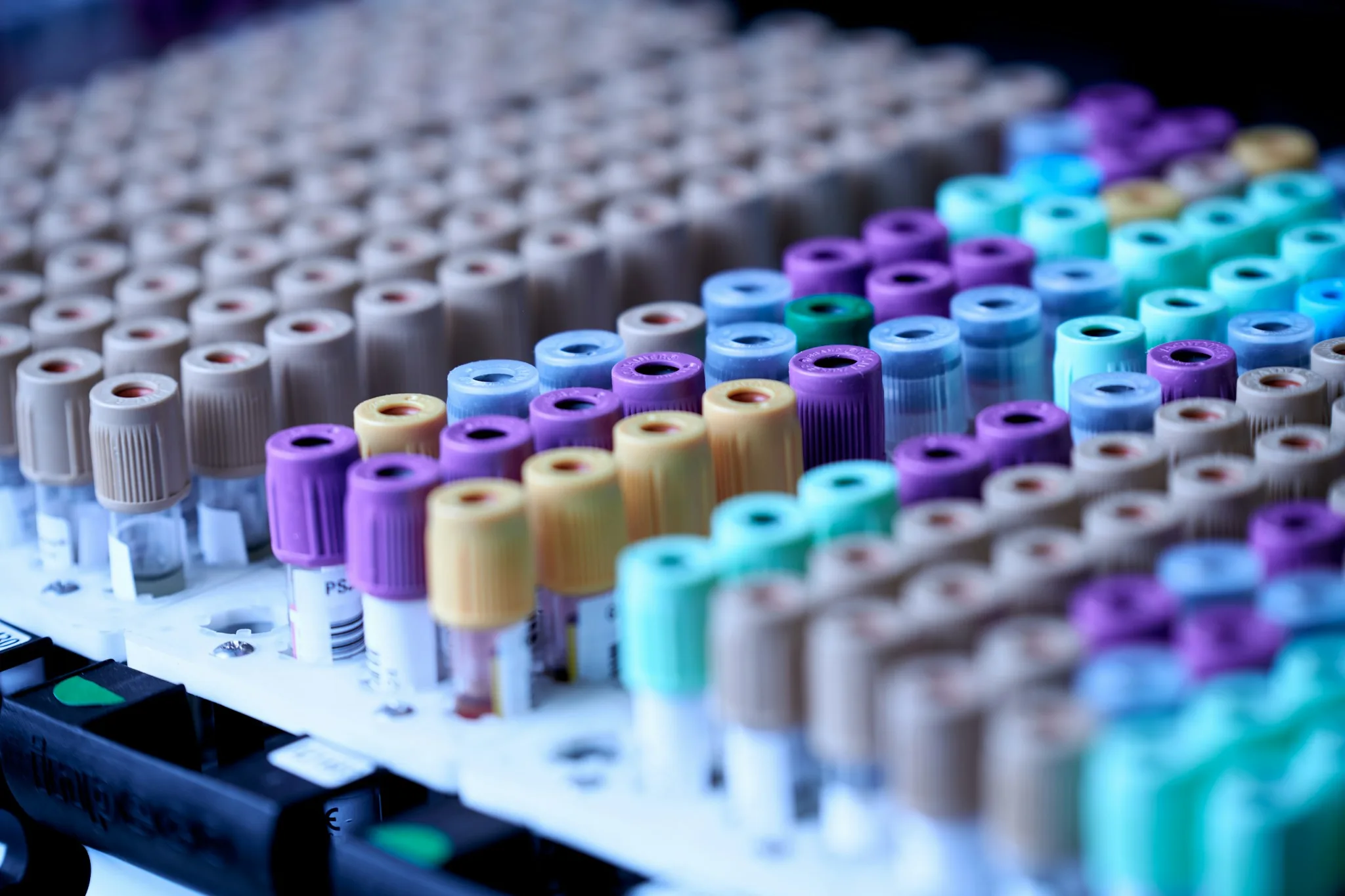
Apple announced a lot of hardware on September 9, 2026. A folding iPhone. New watches. New AirPods. The quietest announcement may matter most to your health. Apple Health Labs lets you buy a blood panel of more than 50 biomarkers for $119, schedule the draw inside the Health app, and have the results land next to your Apple Watch data. The draw happens at about 2,000 Quest Diagnostics locations in the United States.
This is new ground. Apple has let the Health app import lab results for a while. Buying the lab work from inside the app is the new part. The results are meant to feed Health Age, a new feature that compares your body's metrics to your calendar age.
There are real limits, and this post covers them. Apple has not published the full list of markers. The feature is not live yet. And it is a wellness tool, not a diagnosis. Here is everything Apple has actually said, and what it means for you.
The short answer
- Apple Health Labs is a new part of the redesigned Health app, announced on September 9, 2026. You buy and schedule lab work from your phone.
- The panel costs $119 and covers more than 50 biomarkers. A biomarker is a measurable substance in your blood that says something about your health.
- You book through the Health app, then get your blood drawn at one of about 2,000 Quest Diagnostics locations in the U.S.
- Results flow into the Health app and can feed Health Age, Apple's new score that compares your metrics to your chronological age. Apple names A1c and LDL as lab values the algorithm can use.
- What it is not: a diagnostic test, an insurance-covered screening, or a global service. The redesigned Health app arrives later this year, starting in U.S. English.
What is Apple Health Labs?
Apple Health Labs is the lab-testing piece of a much bigger Health app rebuild that Apple announced at its fall 2026 event. The redesigned app has two new tabs. An Insights tab summarizes your heart, sleep, readiness, fitness, vitals, and cycle tracking data as it changes through the day. A Longevity tab looks at your long-term health across heart health, sleep, mental wellbeing, movement, metabolic health, hearing, and nutrition. We cover the watch side of that update in our watchOS 27 health features guide.
The Labs feature sits inside that Longevity tab. The idea is simple. Instead of waiting for a yearly checkup to get blood work, you buy a panel in the app, pick a Quest Diagnostics location, and go get your blood drawn. Quest Diagnostics is one of the largest lab companies in the United States, so the draw sites are the same professional labs your doctor already sends orders to.
This launch did not happen overnight. As 9to5Mac reported in August, Apple had been working on a revamped Health app under the internal code name Project Mulberry. Rumors pointed at a standalone Health+ service with doctor videos. Apple reportedly scaled that back and folded the features into the regular Health app instead. The revamp was delayed past iOS 26.4 and past the first iOS 27 release before finally being announced alongside the Apple Watch Series 12.
The panel itself costs $119 and includes more than 50 key biomarkers. The draw happens at roughly 2,000 Quest Diagnostics locations in the U.S. Those are the two numbers Apple has committed to publicly. Everything else about the panel is still partly undisclosed.
What does the $119 panel actually test?
Apple says the panel features "over 50 key biomarkers." A biomarker is a measurable substance in blood, like a cholesterol reading or a blood sugar number, that reflects something about your health. Fifty markers is a big panel. A basic cholesterol screen covers about four.
Here is the honest caveat: Apple has not published the full list of markers. The company has named exactly two in its announcement, A1c and LDL, because both feed the Health Age feature. A1c is a measure of your average blood sugar over the past three months. LDL stands for low-density lipoprotein. It is the "bad" cholesterol that builds up in artery walls and raises heart disease risk.
So what fills out the other 48-plus markers? Apple has not said. A panel of this size and price normally covers the groups below. Treat the unconfirmed rows as reasonable expectations, not promises.
| Biomarker group | What it usually covers | Status in Apple's panel |
|---|---|---|
| Metabolic health | A1c, fasting glucose, insulin | A1c confirmed by Apple |
| Cholesterol and lipids | LDL, HDL, triglycerides | LDL confirmed by Apple |
| Complete blood count | Red blood cells, white blood cells, hemoglobin, platelets | Not confirmed |
| Thyroid | TSH and related hormones | Not confirmed |
| Liver and kidney function | ALT, AST, creatinine, eGFR | Not confirmed |
| Inflammation and nutrients | hs-CRP, vitamin D, B12, ferritin | Not confirmed |
If metabolic markers matter to you, it is worth knowing what a single A1c number hides. A three-month average cannot show you the spikes and dips after meals. That is why some people without diabetes still wear a continuous glucose monitor, which we cover in CGM without diabetes.
Apple will almost certainly publish the exact marker list when the feature goes live. Until then, $119 buys a panel whose size is known and whose contents are mostly not. If a specific marker matters to you, say thyroid antibodies or ApoB, wait for the official list before paying.
How do you book a draw?
The booking flow lives in the Health app. Apple describes it this way: you schedule and purchase the lab work directly through the Health app, then complete the blood draw, called a venipuncture in lab language, at a participating Quest Diagnostics patient service center. There are about 2,000 of those in the U.S., which covers most metro areas.
One catch, and it is a big one. You cannot book yet. The redesigned Health app is "available later this year, starting in U.S. English, with more languages to follow." iOS 27 itself arrives on September 14, 2026, but the new Health app design, including Labs, ships after that. Apple has not given a specific date.
When it does go live, the requirements will be:
- An iPhone that supports Apple Intelligence, since the new Health app leans on it for insights. Apple has not published a full device list for Labs specifically.
- U.S. English as your device language, at least at first.
- A Quest Diagnostics location near you. Roughly 2,000 sites are participating in the U.S.
- The $119 payment, handled in the app at purchase time.
As Popular Science noted in its event coverage, booking lab work from inside a phone's health app is new territory. No other major platform sells clinical blood draws this way today. Whether the booking flow is smooth or cluttered will be one of the first things reviewers test when it ships.
How do lab results feed into Health Age?
Health Age is the centerpiece of the new Longevity tab, and we break it down fully in Apple Health Age. The short version is simple. It uses your Apple Watch data to show how your metrics track against your chronological age, informed by what Apple calls the best available science. Run fast, sleep well, and keep a low resting heart rate, and your Health Age can come in below your birthday age.
The algorithm can factor in metrics from Apple Watch like VO2 max, resting heart rate, sleep, and HRV. VO2 max is a fitness measure of how well your body uses oxygen during effort. HRV stands for heart rate variability, the tiny variation in timing between heartbeats, and it is a common signal of stress and recovery.
Lab data is the new ingredient. Apple says users can add lab data, including A1c and LDL, to enrich the Health Age analysis. That is the whole logic of the $119 panel. Watch sensors measure your physiology day to day. Blood work measures your chemistry. Health Age combines both and tells you where you stand.
The Health app also adds context around results. Apple says that after you receive annual lab results, the app will present a video from an Apple Health clinical expert explaining, for example, your LDL levels, what the data means, and how to improve it if needed.
If you want to go deeper on your numbers, apps can help there too. Ness, an iOS app built on Apple Health data, has an AI coach you can use to analyze and discuss your lab results once they are in your Health records. More on that at the end of this post.
How does Apple Health Labs compare to Function Health and a standard annual panel?
Apple is not the first company to sell direct-to-consumer blood panels. Function Health is the best-known player, and its homepage lists its current terms: a $499 annual membership, charged once a year and framed as $42 per day, that includes 160+ lab tests with testing twice a year and on demand. Function also draws at 2,000+ Quest Diagnostics locations, does not use insurance, is HSA and FSA eligible, and has clinicians review every result and flag issues.
A standard annual panel is the third option. That is the blood work your primary care doctor orders at a yearly checkup, typically a lipid panel and a basic metabolic panel, and it goes through insurance when your doctor judges it medically necessary.
Here is how the three stack up on what each has actually published:
| Apple Health Labs | Function Health | Standard annual panel | |
|---|---|---|---|
| Price | $119 per panel | $499 per year, HSA/FSA eligible | Billed through insurance |
| Number of tests | 50+ biomarkers | 160+ lab tests per year | Varies by order, usually fewer |
| Where you book | In the Health app | On Function's website | At a doctor's visit |
| Draw locations | ~2,000 Quest sites, U.S. | 2,000+ Quest sites, U.S. | Any lab your insurer covers |
| Who reviews results | Apple Health clinical content, expert videos | Clinicians review every result and flag issues | Your doctor |
| Insurance | Apple has not said | Not needed, per Function | Typically covered when ordered |
| Availability | Later this year, U.S. English first | Live now | Live now |
The honest comparison depends on what you want. Function gives you more tests, twice a year, with clinician review, for about four times the price. A doctor-ordered panel can cost you little out of pocket if insured, but covers fewer markers and requires an appointment. Apple's pitch is convenience and integration: one purchase inside an app you already use, with results feeding a longevity score.
If you want an AI layer on top of any of these options, we tested the field in the best AI health assistant in 2026.
Is it worth $119?
If you own an iPhone and already track your health with Apple Watch, $119 is a fair price for a 50-marker panel. Comparable direct-to-consumer panels cost more per marker, and none of them can drop results straight into the same app that holds your VO2 max and sleep score. The integration with Health Age is the real product. A blood panel you never act on is just a receipt.
There are three honest reasons to wait. First, the full marker list is unpublished, so you cannot yet confirm it covers what you care about. Second, there is no shipping date, only "later this year." Third, Apple has said nothing about insurance coverage or how results are reviewed if something comes back out of range. Function Health, for contrast, states plainly that clinicians review every result.
And if you already get annual blood work through your doctor, you may not need to pay at all. The Health app can already import existing lab results and show trends over time. Imported A1c and LDL values can enrich Health Age the same way. The $119 panel mainly buys convenience and, once the full list is out, possibly broader coverage than your doctor orders.
Our take: watch this one, and check the marker list on day one. If it covers what you want, the price is right. If you want maximum coverage and human review today, Function Health is the proven option at $499 a year.
FAQ
Is Apple Health Labs available outside the US?
No. At launch, the draws happen at roughly 2,000 Quest Diagnostics locations in the United States, and the redesigned Health app itself arrives starting in U.S. English, with more languages to follow. Apple has not announced plans for other countries. If you are outside the U.S., there is no timeline yet.
Does insurance cover it?
Apple has not said anything about insurance. The panel is sold as a fixed $119 purchase inside the Health app, which works like direct-pay testing rather than an insurance claim. Function Health, a comparable service, states that no insurance is needed and that its membership is HSA and FSA eligible. Whether Apple's panel qualifies for HSA or FSA spending is unknown until Apple publishes payment details.
Do I need an Apple Watch to use it?
To book the panel, you need the redesigned Health app on an iPhone that supports Apple Intelligence. You do not need a watch to buy the panel or see the results. You do need an Apple Watch for Health Age itself, since Apple lists it as a requirement. Without a watch, the lab results still land in the Health app, but they cannot feed the age-comparison score.
When can I actually book a draw?
Not yet. Apple announced the feature on September 9, 2026, and said the redesigned Health app will be available "later this year," starting in U.S. English. iOS 27 ships on September 14, but the new Health app design follows after that. Apple has not given a date, so the practical answer is sometime in late 2026, in the U.S. first.
Is it a diagnostic test?
No. Nothing in Apple's announcement frames the panel as diagnosis, and Apple labels its Vitals experience "for wellness purposes only and not for medical use." The panel is a screening and tracking tool. If a result comes back out of range, the next step is a conversation with a physician, not a conclusion from an app.
Can I use lab results I already have instead of buying the panel?
Yes. Apple says Health app users can already import existing labs and see their results and trends over time. Imported values, including A1c and LDL, can enrich the Health Age analysis. If your doctor orders thorough blood work each year, importing those results gets you much of the benefit at no extra cost.
Sources
- Apple Newsroom, Apple advances health and fitness capabilities using Apple Intelligence and the most accurate heart rate sensing in a wearable, Apple, September 9, 2026.
- Popular Science, Everything Apple just announced at its fall 2026 event: The folding iPhone Duo, iPhone 18, Apple Watch Series 12, and new AirPods, Popular Science, September 2026.
- Michael Burkhardt, Will Apple's 'revamped' Health app with AI health coach debut next month?, 9to5Mac, August 29, 2026.
- Function Health, Function | 100 Healthy Years, functionhealth.com, accessed September 15, 2026.
Related reading
- Apple Health Age
- watchOS 27 Health Features: What's Changing on Your Watch This Fall
- The Best AI Health Assistant in 2026
- CGM Without Diabetes: Is a Glucose Monitor Worth Wearing?
- Apple Watch Series 12 vs Whoop 5.0 vs Oura Ring 4
One more thing worth knowing before you pay for any panel. Lab numbers are only useful if something helps you act on them. Ness is an iOS health-score and AI coach app built on your Apple Health data, and once your lab results are in Apple Health, you can analyze and discuss them with Ness's AI coach, alongside your sleep, heart rate, and activity data. Ness is $12.99 per month or $79.99 per year on the App Store.
Nothing here is medical advice. Health apps and wellness scores are tools, not diagnoses; if you have symptoms or a health condition, see a physician.